For decades, the undercarriage of a Chevrolet Silverado was defined by a polarizing engineering choice: hot-melt wax coating. While GM championed it for its self-healing properties against minor stone chips, truck owners in the Rust Belt and coastal regions fought a relentless battle against peeling wax and premature surface rust.
With the debut of the next-generation 2027 Chevrolet Silverado 1500 (built on the evolved T1-2 platform), Chevy is quietly rewriting its structural legacy. To complement its bold new exterior and powerhouse Gen 6 V8 engines, GM is shifting toward advanced electrocoated (E-coated) frame technology across its truck lineup, moving away from traditional wax formulas to directly challenge the corrosion-resistance standards set by its fiercest competitors.
What is an Electrocoated (E-Coated) Frame?
Electrocoating is not a mere spray paint or rubberized undercoating. It is an industrial immersion process that relies on electrical currents to bond a protective polymer layer directly to the raw steel frame.
The manufacturing process follows a precise sequence:
- Total Submersion: The fully welded, high-strength steel frame is dipped into an advanced chemical cleaning and phosphate bath to strip away impurities.
- Electrical Bonding: The clean frame is submerged in an e-coat tank containing epoxy resins and pigments. An electrical charge is passed through the liquid while an opposite charge is applied to the steel frame.
- Uniform Attraction: The electric field pulls the coating particles out of the liquid, bonding them directly to the steel. Because electricity follows the path of least resistance, the coating automatically builds a completely uniform thickness, covering interior channels, weld seams, and hard-to-reach brackets.
- Thermal Curing: The frame is baked in an industrial oven to cure and harden the resin, creating a durable, cross-linked polymer shell.
Why the 2027 Silverado Needed This Change
Historically, if a Silverado’s wax coating was scraped by off-road obstacles or degraded by automated high-pressure car washes, bare steel was exposed to moisture, road salt, and winter brines.
With the 2027 model year introducing heavily upgraded off-road models—including the Trail Boss and the highly capable ZR2 Bison Edition with its 35-inch mud-terrain tires—the undercarriage demands a coating that matches the truck’s mechanical grit. The E-coat finish provides a highly resilient barrier that doesn’t melt under extreme exhaust heat, wash away under pressure, or scrape off easily during underbody scraping on trails.
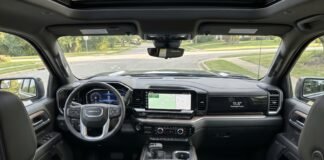
For truck buyers keeping an eye on long-term resale value, this structural upgrade is arguably more critical than the 2027 Silverado’s massive 16.3-inch infotainment display or its panoramic sunroof. A frame that resists corrosion ensures that steering geometry, suspension mount integrity, and crash-box energy absorption function perfectly for hundreds of thousands of miles.
By upgrading to an electrocoated frame architecture on the 2027 Silverado, Chevrolet is finally giving truck owners an undercarriage built to outlast the elements, closing the gap on rust vulnerability and setting a new benchmark for full-size truck durability.
For a closer look at how different truck frame coatings hold up under heavy real-world exposure, check out this Frame Rust Coating Technology Comparison. This video breaks down the practical differences between undercarriage protections used by major manufacturers and why shifting away from wax is a major win for durability.