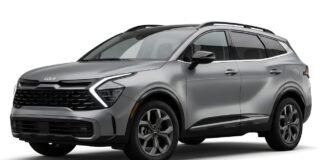
Think of the GLS as an S-Class that hit the gym, gained a taller stance, and picked up a third row of seats where actual adults can sit without their knees touching their chins. For 2027, Mercedes didn’t start over from a blank sheet of paper, but they did swap out nearly half of the components under the skin and throughout the cabin.
Here’s what’s actually new, how it behaves once you pull out onto the road, and whether it makes sense for your garage.
Exterior Design
Walk up to the front, and the branding hits you immediately. Mercedes went completely all-in on their three-pointed star emblem. Take a close look at the grille: it’s peppered with tiny star cutouts. Look closer at the headlamps and taillights, and you’ll spot illuminated mini stars glowing inside the actual housings.
There’s even a back-lit hood ornament on the options list if you like a bit of drama at night. The silhouette is still unmistakably GLS, but the tweaks make the whole truck sit wider and look a lot more chiseled.
Interior Design
The old dual-display dashboard is gone. Now, almost the whole dash is one seamless slab of glass known as the Superscreen, housing three separate displays side by side.
- Your gauge cluster keeps speeds and route cues right in your eyeline without clutter.
- The center stack runs their fresh MB.OS software, meaning built-in Google Maps that never lags and a voice assistant you can talk to normally without rehearsing your commands.
- The passenger screen lets your copilot cue up movies or fuss with playlists completely independent of your map view.
The catch? If you prefer reaching over to click a chunky climate knob or tap a real button, you’re going to grumble at first. Virtually everything is a touch slider or a screen tap now. That said, the cabin still feels like a vault. The leather is thick, the double-pane glass kills road noise dead, and third-row passengers still get genuine, no-apologies legroom.
What’s Under the Hood?
Mercedes leaned heavily on 48-volt mild-hybrid setups for both engines, mostly to cover up turbo lag and smooth out the clunky auto start-stop you usually get in big SUVs.
GLS 450: The base engine is a 3.0-liter turbocharged straight-six making around 375 to 400 horses. It hits 60 mph in about five and a half seconds. On paper that sounds modest for a rig this size, but in practice, you won’t break a sweat merging onto a fast highway with a full crew and a weekend’s worth of luggage.
GLS 580: If you just love the character of an eight-cylinder, the twin-turbo 4.0-liter V8 cranks out 530 horsepower. Dropping that 0-60 sprint to 4.5 seconds means you’re moving a genuine three-ton living room at sports car speeds, which never stops feeling a little surreal.
On Road Driving Experience
This is really where the GLS pulls away from traditional, truck-based rivals like the Escalade or Navigator. Because it’s built on a unibody platform rather than a pickup frame, it handles road imperfections with way more finesse.
The standard air suspension effortlessly erases nasty highway expansion joints and pitted asphalt. If you spend the extra cash on the active suspension upgrade, the SUV uses windshield cameras to scan the road ahead in real time.
It softens up individual dampers right before you hit a pothole and subtly leans the chassis into corners. That might sound like a gimmick, but it actually keeps morning coffee from splashing everywhere and stops your passengers from getting carsick on winding roads.
You’re never going to mistake it for a sports wagon, but the steering is effortless in tight parking structures and wonderfully planted at an 80 mph cruise.