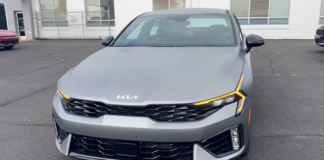
The next-generation 2027 Hyundai Elantra N marks the high-performance evolution of Hyundai’s eighth-generation compact sedan. Built on a stiffer, slightly larger platform, the upcoming iteration blends motorsport-honed TCR track engineering with an aggressive new design philosophy and advanced in-cabin tech.
Key Expected Specifications & Architecture
| Category | Specification / Expected Detail |
| Engine | Upgraded 2.0L Turbocharged I4 or 2.5L Turbo I4 (~286–300+ hp) |
| Drivetrain | Front-Wheel Drive (FWD) with Electronic Limited-Slip Differential (e-LSD / N Corner Carving Cup) |
| Transmissions | 6-speed manual with rev-matching or 8-speed wet dual-clutch (N DCT) |
| Platform Dimensions | Length: 4,765 mm (+55 mm), Wheelbase: 2,750 mm (+30 mm), Width: 1,855 mm (+30 mm) |
| Infotainment | Android-based Pleos Connect (12.9″ to 14.6″ screen) with Gleo AI assistant |
| Exhaust & Sound | Active variable dual exhaust system with characteristic N-mode pops & bangs |
Design: “Art of Steel” Meets N Aerodynamics
The standard eighth-generation Elantra introduces Hyundai’s Art of Steel design language, trading the previous generation’s multi-creased panels for wider, more athletic proportions reminiscent of the N Vision 74.
- Front Fascia: Ultra-slim horizontal DRLs sit above a widened, blacked-out geometric radiator grille optimized for intercooler airflow, framed by N-signature matte red lower lip splitters.
- Widebody Stance: Blistered front and rear fenders cover lightweight 19-inch forged alloy wheels wrapped in track-focused rubber.
- Aero Package: A prominent rear wing spoiler, deeper functional rear diffuser, and large dual exhaust tips finish the tail section.
Chassis, Powertrain & Motorsport Lineage
Hyundai’s touring car racing dominance—including multiple class victories at the Nürburgring 24 Hours and IMSA championships—directly informs the hardware tuning of the next N:
- Powertrain Dynamics: While the base platform utilizes standard 2.0L and hybrid units, the N division is slated to retain a high-boost turbo setup. Hyundai is focusing on broader mid-range torque and thermal stability on track rather than raw horsepower wars.
- Integrated Drive Axle (IDA): Incorporating WRC-inspired driveshafts integrated directly into the wheel hubs to shave unsprung weight and tolerate heavy lateral G-forces.
- Electronically Controlled Suspension (ECS): Upgraded multi-stage adaptive damping to better balance daily road compliance with stiffened, roll-resistant track modes.
Cockpit & Driver Engagement
Inside, the driver-centric cockpit pairs track-focused ergonomics with next-generation electronics:
- N Bucket Seats: Heavily bolstered, lightweight sport seats sitting lower in the cabin to optimize the driver’s center of gravity.
- N Steering Wheel: Featuring dedicated N Mode buttons, standard shift paddles (on DCT), and a red N Grin Boost (NGB) button for temporary overboost functionality.
- Pleos OS & Telemetry: Hyundai’s Android-based infotainment platform includes an updated N Performance Track map, providing real-time lap timing, g-meter readings, oil temperature, and turbo boost metrics. Physical controls for core climate and volume functions are retained for rapid access during hard driving.
The 2.5L Turbo Engineering Transition
- Engine Packaging: Former Hyundai N executive technical advisor Albert Biermann confirmed the upcoming eighth-generation (CN8) architecture was engineered to accommodate the larger Smartstream 2.5L T-GDi engine.
- Emissions & Power: Moving from the 2.0-liter “Corner Rascal” block to a 2.5-liter unit allows Hyundai to meet stricter global emissions standards without sacrificing top-end performance, targeting over 300 hp and 311+ lb-ft of torque under track-tuned N calibration.
- Hybrid Electrification Possibility: Hyundai N has concurrently explored performance hybrid setups (such as a 1.6T or 2.0T paired with an electric motor for torque-fill) to bridge the transition toward full electrification.
Market Availability & Regional Strategy
- Target Markets: The next-generation ICE/hybrid N is focused heavily on North America, South Korea (as the Avante N), and Australia (as the i30 Sedan N).
- European Exclusion: Due to stringent Euro 7 regulations and Hyundai Europe’s pivot to pure EVs like the Ioniq 5 N and Ioniq 6 N, standard petrol-only N sedans are unlikely to return to western European showrooms.
- Timeline: Expected global reveal in late 2026, arriving in dealerships for the 2027 model year.
Market Positioning vs. Hot Hatch Rivals
| Feature | 2027 Hyundai Elantra N (Est.) | Honda Civic Type R (FL5) | Toyota GR Corolla |
| Engine | 2.5L Turbo I4 (or 2.0T Evo) | 2.0L Turbo I4 | 1.6L Turbo 3-Cyl |
| Horsepower | ~300–310 hp | 315 hp | 300 hp |
| Drivetrain | FWD + e-LSD | FWD + Helical LSD | GR-FOUR AWD |
| Transmission | 6-Spd Manual / 8-Spd Wet DCT | 6-Spd Manual Only | 6-Spd Manual / 8-Spd Auto |
| Expected US Base MSRP | ~$36,500 – $38,500 | ~$46,000+ | ~$37,500 – $41,000 |