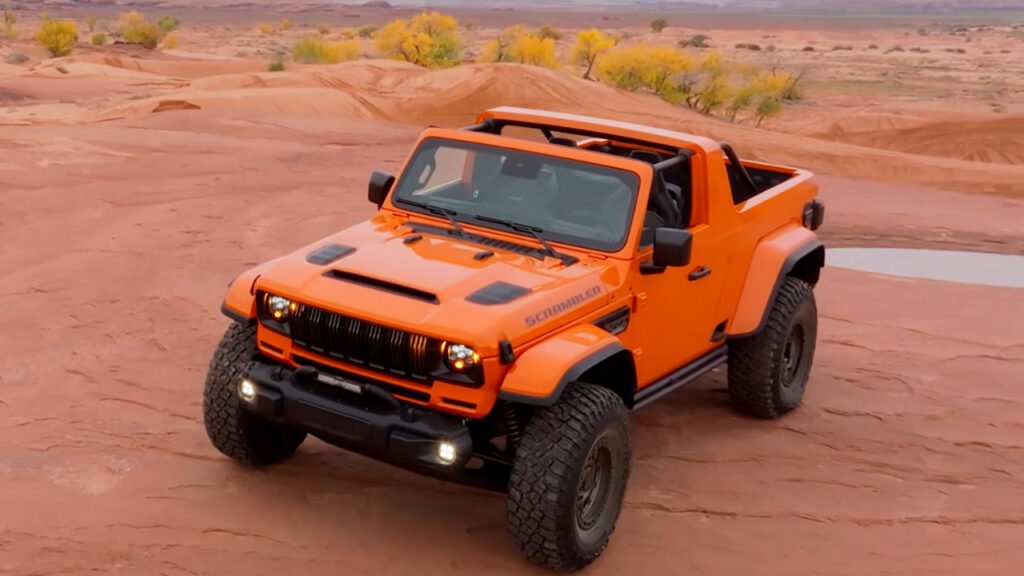
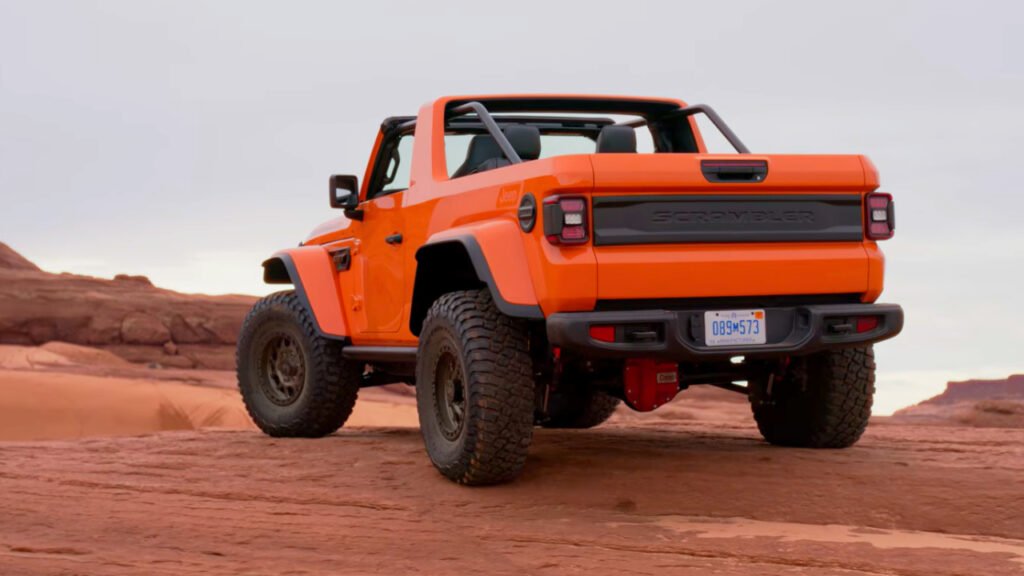
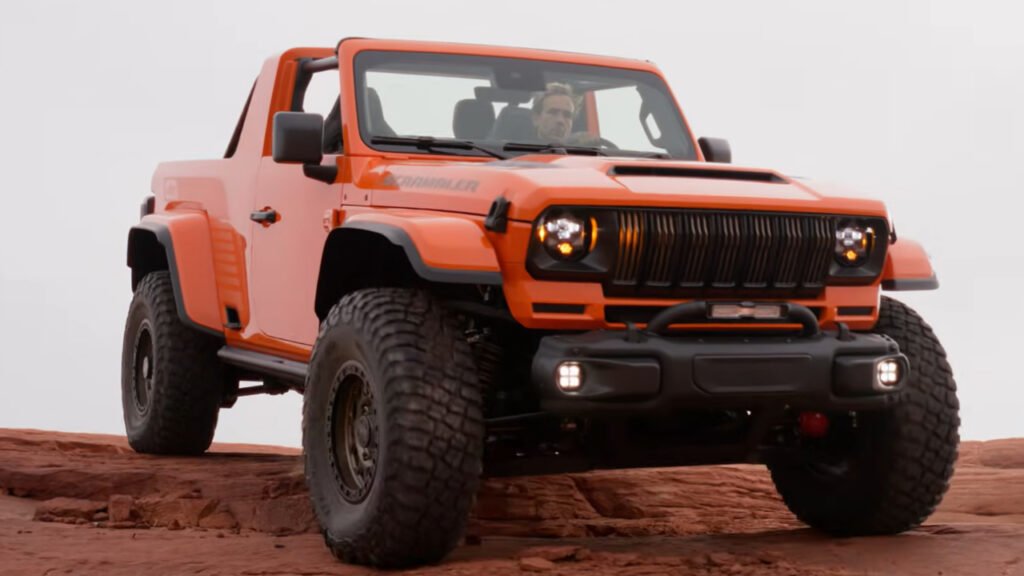
The 2027/29 Jeep Scrambler SRT idea is a modern take on the legendary 1980s CJ-8 Scrambler as an aggressive, high-speed desert weapon. The two-door prototype is built on a modified Wrangler chassis and sports wider doors, redesigned rear bodywork, and a bespoke high-travel independent front suspension, a first for a Wrangler-branded car. The front end was developed with off-road racing champion Casey Currie and is combined with a Trophy Truck-inspired rear axle and heavy-duty racing hardware that can take some real desert pounding.
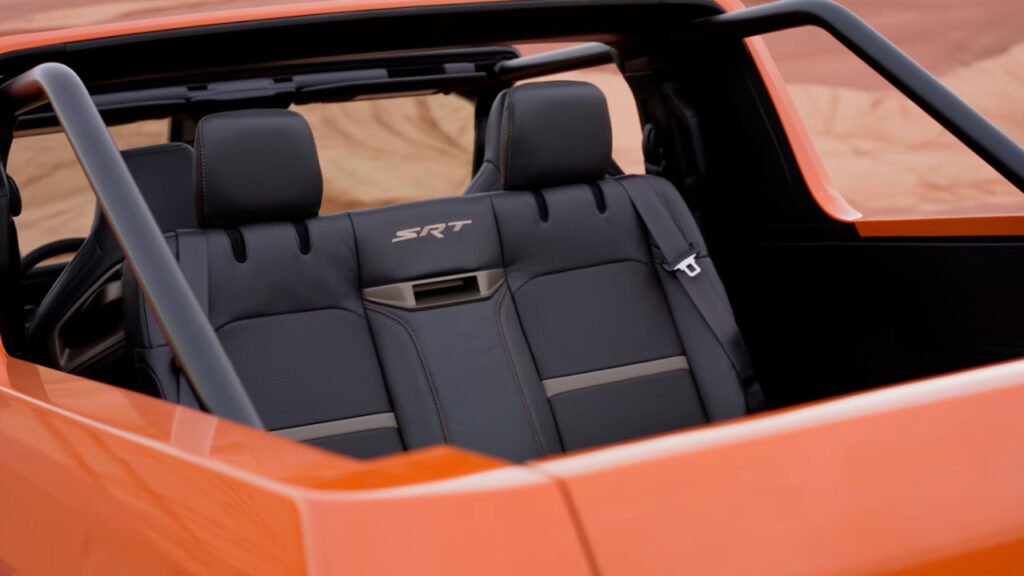
Under the hood, Jeep goes with the 6.4-liter Hemi V8 (392) that pumps out 470 horsepower and 470 lb-ft of torque. Visually it’s an attention grabber with a sharknose grille, oversized fender flares, a prominent hood scoop and eye-popping Punk’n Orange paint highlighted by bronze beadlock wheels. Inside, Dark Graphite leather performance seats provide for the safety and comfort of the occupants.
Unique Utility and Flexibility
The most radical departure from traditional Jeep layouts is the integrated truck bed and its seating system. Rear jump seats can be rotated around 180 degrees so passengers can sit facing backward. They connect to hooks attached to the floor, so they can be removed all at once, instantly converting the space into a full-on, spray-lined cargo bed for motorcycles or camping gear.
How it stacks up against competitors
- Jeep Gladiator: The Gladiator is all about heavy towing and a daily-drivable four-door crew cab layout, while the Scrambler SRT is a purpose-built two-door performance machine, designed for high-speed desert running.
- Ford Bronco Raptor: The Bronco Raptor has similar high-speed desert capability and independent front suspension, but the Scrambler SRT has the utility of an open-air pickup bed and a naturally aspirated V8.
- High-End UTVs (Polaris RZR Pro R): The Scrambler SRT is bringing race-level desert pacing to a street-legal package with a structural roll cage, 470 horsepower and Trophy Truck suspension, entering dedicated side-by-side territory.
Stellantis performance executives say this concept is a preview of future production models expected by 2030, designed with the notion that the open desert can be treated just like a racecourse.